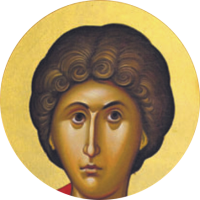
| Last Saturday evening on National Public Radio, there was a program about the impact of the current pandemic on the human brain and its functions. It was fascinating. The program was entitled “This is Your Brain During a Pandemic.” It laid out the neurological and physiological effects of being held in an anxiety-producing situation like a global pandemic for any length of time. The host for the program began with these words: “The pandemic has disrupted our lives, work, and schedules; thrust us into a fog of anxiety and uncertainty; and in some cases, stretched us impossibly thin between the pressures of work and family. On this episode, we explore how we can reclaim our best brains. We will hear stories about innovating under pressure, accepting boredom as a cognitive reset, and reaching the ‘creative flow’ state.” The phrase that caught my attention was this one: “…accepting boredom as a cognitive reset.” The announcer was saying that our brain could experience a “reset” during times when we are doing nothing! We live in what has been called the “hustle culture.” We’re always on the move, always building, making, managing, and organizing, career-developing, etc.. Social media pushes us to be productive during these at-home days. Productivity is the goal……keep busy….keep your mind distracted…keep moving. The announcer continued: “It can feel like a constant push-and-pull. One minute our brains tell us, “Relax, it’s fine to do less.” The next, it’s “Get off the couch and get busy – make some use of yourself.” But a growing body of research suggests that doing nothing, even letting ourselves be occasionally bored, is crucial for our cognitive (brain) health. The question is, have we forgotten how?” One fact startled me. In a scientific psychological survey, a majority of people would rather be electronically shocked than sit alone with their thoughts! Incredible! Doing is better. Being in stillness these days is almost a character flaw. Call it what you will — stillness, quietude, contemplation – all these, even boredom, actually physically assist our brains to produce new neurons, regenerating our brain function and therefore our thinking. Doing nothing benefits us. What has any of this got to do with our Orthodox faith? Again, we see the confluence of faith and science. Meister Eckhart, a German theologian and philosopher of the medieval period, summarizes the nature of quietude in a simple sentence: “Nothing in all creation is so like God as stillness.” Stillness communicates the very presence of God. In Psalm 46 which contains a scene of earthly tumult, noise, and combat, King David pens at the end: “Be still, and know that I am God. I will be exalted among the heathen. I will be exalted in the land.” (Ps. 46:10) Stillness brings the knowledge of God in His actions and energies. We think God behaves as we do – in drama, in words and incessant chatter. In the First Book of Kings, we read the story of God’s encounter with Elijah. The prophet thought God was approaching in the wind, then an earthquake, then in a fire – but God was in none of these earth-shaking things. Where was He? In the gentle, silent breeze. (I Kings 19:11-13) God comes to us not in drama, nor bluster, nor cacophony. God most effectively comes to us in silence, in the stillness of our own hearts – without a word. St. Mark the Ascetic joins stillness and silence: “The intellect cannot be still unless the body is still also; and the wall between them cannot be demolished without stillness and prayer.” These are but a few citations about the pivotal place of stillness and silence in our Holy Orthodox faith. So as the “hustle culture” is counteracted by just being still, our faith tells us that in stillness and contemplation, in silence, God comes near us, reaches into our shaky, burdened hearts and souls, and seeks to make us new again. I is in deafening silence that the quiet God comes to us. Abbot Thomas (Keating) affirms the importance of stillness: “God’s first language is silence. Everything else is a translation.” This tends to frighten us. We have lost the sense of how to be still and silent – how to “sit with our own thoughts.” We have buried them beneath the noise of a scattered and chaotic world. Many people who find stillness and silence altogether beyond their present capacity, and for whom the familiar phrases written in Scripture or in the books of prayer have grown dull and dry, can renew their inward life through the practice of contemplation. Metropolitan Kallistos of Diocleia offers us encouragement: “Nature and Scripture complement each other. In the words of St. Ephrem the Syrian: “Wherever you turn your eyes, there is God’s symbol; Whatever you read, you will find there his type. Look and see how Nature and Scripture are linked together. Praise for the Lord of Nature. Glory for the Lord of Scripture.” St. John Climacus summarizes the “process” of stillness and silence: “The first stage of this tranquility consists in silencing the lips when the heart is excited. The second, in silencing the mind when the soul is still excited. The goal is a perfect peacefulness even in the middle of the raging storm.” (Ladder of Divine Ascent) How can we accomplish this? How do we develop the prayer of silence and stillness in the ”hustle culture”? It seems so difficult to even pray everyday! The first thing you and I need to be aware of is this: If you wait for the world to politely step aside for you to live a more interior life, you’ll never do it. You have to make the decision, and add to that, the freedom that you are going to set aside some time each day for this kind of silent prayer. You need to have being alone with God become a priority of your prayer life. This kind of prayer is really a life of learning to be receptively open to God’s presence in our lives. God is always present to us, but we’re not always present to God. We constantly speak to Him one thousand petitions and needs, but rarely allow Him to get a “word” in edge-wise! As the Book of Proverbs reminds us: “Listen for God’s voice in everything you do, and everywhere you go, and He shall direct thy path.” (Proverbs 3:6) Learning to hear God speak in your heart is a very different thing than thinking about Him with your mind. As the mathematician and theologian, Blaise Pascal, (1623-1662) wrote: “The heart has its reasons which reason knows not of.” It is there, in the heart, you will discover stillness and silence – not in your brain. The purpose of stillness and silence in prayer is fundamentally different than its scientific or neurological objective, as the NPR radio program suggested. Its purpose is closeness to God. Ultimately, it is something God does in us not something we accomplish by ourselves. It is focused on our heart and soul, on the interior life, not on cognitive (or “brain reset”) development. The Western nun and mystic, Teresa of Avila, provides one of the best definitions of this daily time of stillness and silence: “Contemplative prayer is a simple gaze upon God in silence and love. It is a gift of God, a moment of pure faith during which the one praying seeks Christ, empties himself to the loving will of the Father, and places his being under the action of the Holy Spirit.” So how do I begin to integrate stillness and silence into my prayer? As with all things, begin with the Word of God. Choose a passage, read it prayerfully, twice if you need to. This action symbolizes your willingness to listen to God, to sense His presence, and to grow to feel His action in your heart. Secondly, close your eyes, “settle in” to what you have read, ask yourself “What is God saying to me in this passage?” – not what He is saying in general, or what you feel the Church might say. He speaks TO YOU personally! Thirdly, when extraneous thoughts and distractions come, as indeed they will, go back to the Sacred Word. There is a latin term, “ruminatio”, referring to a cow chewing its cud. It became a term signifying turning over God’s Word again and again. Do the same with the passage – let it take over your person, dwell on God’s message to you, and do not rush! Lastly, at the end of your prayerful dwelling with God’s Word, remain in silence, with your eyes closed for some minutes. Don’t worry about technique or the above order. If things at the beginning seem to collapse, simply rest with the Lord, be in His presence, know that He still speaks to you in your imperfect stillness! Being still is an opening, a response, a putting aside of all the debris that stands in the way of our being totally present to the Present Lord, so that He can be present to us. It is a laying aside of thoughts, so that the heart can attend immediately to Him. All prayer is a response. The Lord first knocks, beckons, calls to us. Being with Him in stillness and silence is our response. Let us look to the icon of the image of Christ “The Angel of Hesychia”(stillness) and ask Him to teach us how to escape from the “hustle culture” to the silent patch of Paradise that is our own heart! Christ is Risen! Indeed, He is Risen! Faithfully yours in Christ’s Resurrection, |